For patients living with Diabetes, regular Diabetic eye examinations are essential to protecting both vision and overall ocular health. Diabetes can affect the tiny blood vessels in the retina, leading to Diabetic Retinopathy — a condition where these vessels leak, swell, or become blocked, potentially causing permanent vision loss if left untreated.
Diabetic eye disease is a broader term that includes Diabetic Retinopathy as well as an increased risk of Cataracts, Glaucoma, and more. These changes can often develop without noticeable symptoms in the early stages; proactive monitoring is critical.
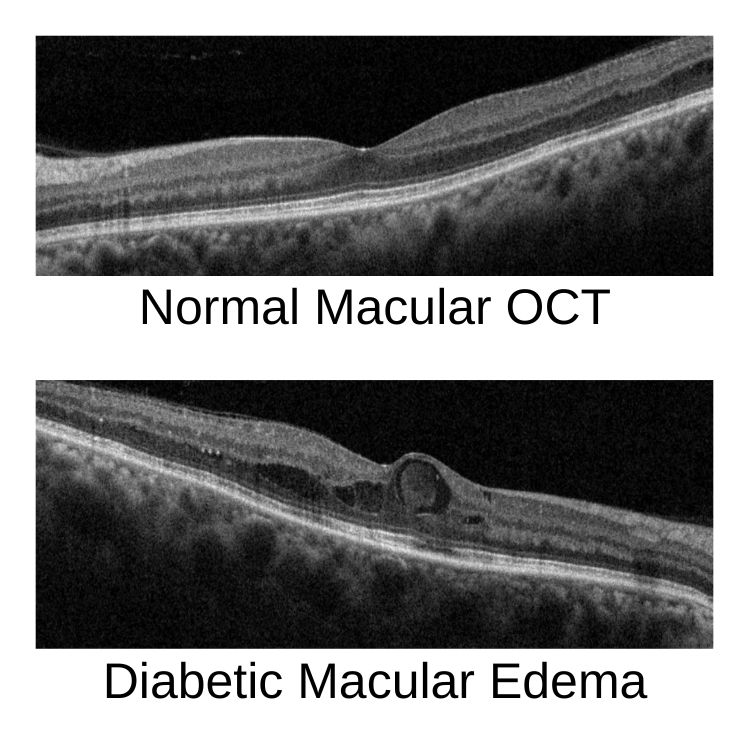
It is recommended by the Canadian Association of Optometry that Diabetics receive a dilated eye examination at least once a year to monitor the Retina for signs of Diabetic Retinopathy. At West 5 Optometry, we can also use advanced diagnostic tools such as OCT scans and Optomap retinal imaging to detect early changes and support timely treatment, helping preserve your sight and long-term ocular wellness.
Glaucoma is when the fluid pressure in your eye is causing damage to the optic nerve affecting your peripheral vision. Glaucoma is often called the “silent thief of sight” because it typically develops without early symptoms. By the time vision changes are noticed, significant, permanent damage has often already occurred. As one of the leading causes of blindness in Canada, early detection through thorough eyecare is essential.
At West 5 Optometry, we prioritize proactive ocular wellness. Comprehensive eye exam including tonometry (measurement of intraocular pressure) and pachymetry (corneal thickness measurement), Optical Coherence Tomography (OCT) measuring the optic nerve, and a review of family history, allowing us to detect glaucoma early and protect your long-term vision.
Optical Coherence Tomography (OCT) is a quick, non-invasive scan that provides a highly detailed, cross-sectional view of key structures in your eye — including the Macula and Optic Nerve. Learn more about the OCT scan here.
The Humphrey Visual Field Analyzer has been a trusted cornerstone of optometric care for decades, designed to measure and map your peripheral (side) vision — the first area affected by Glaucoma. Learn more about the importance of visual field testing here.
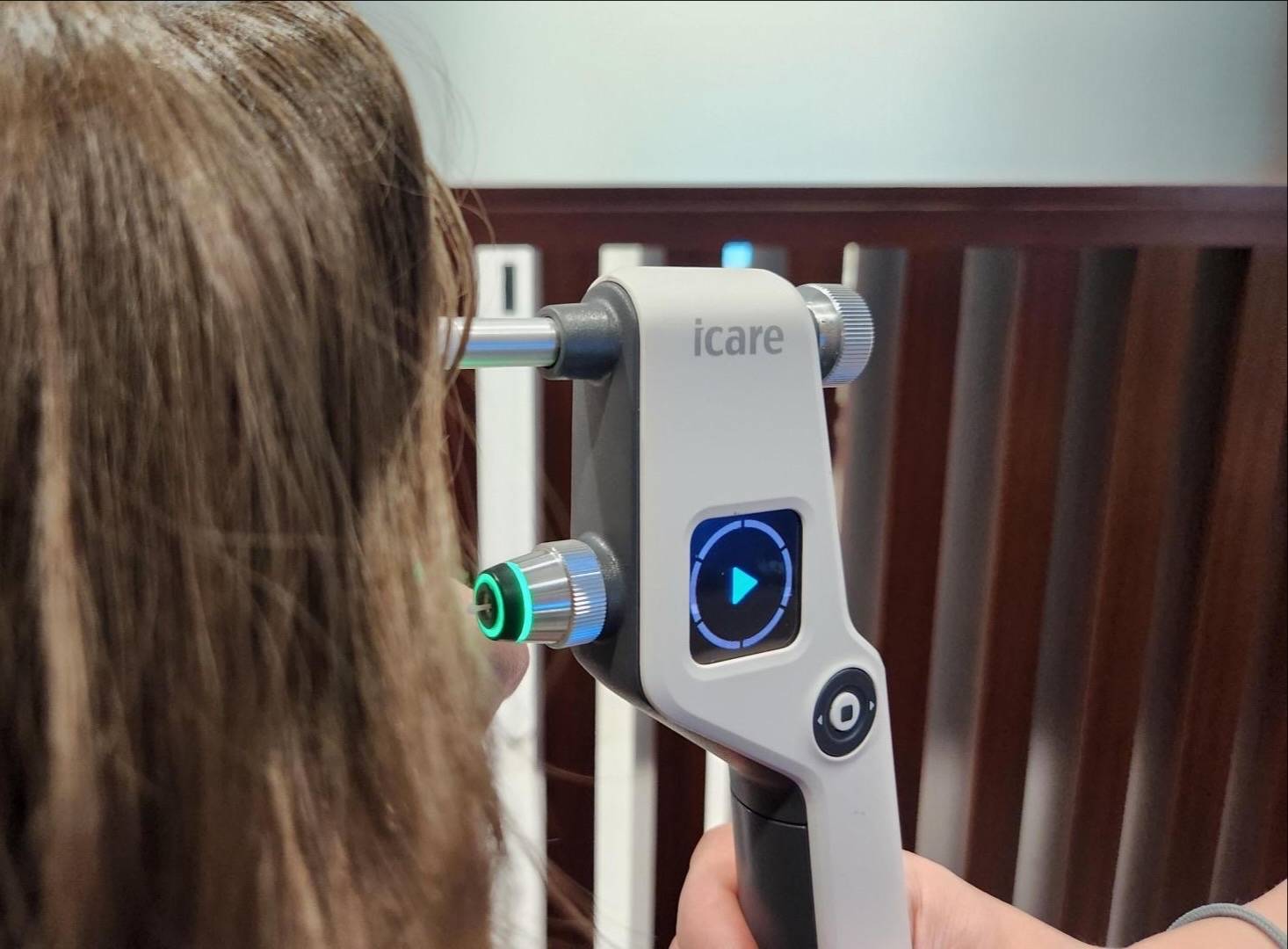
The I-Care tonometer is a quick, gentle, and non-invasive way to measure the pressure in your eyes as an alternative to the “air-puff test”. Learn more about it here.
Inside your eye is a natural lens that helps focus light so you can see clearly. Over time, this lens can become cloudy. Cataracts are a normal part of aging and one of the leading causes of blurry vision in adults over the age of 60. The good news is that cataract surgery is safe, effective, and one of the most commonly performed medical procedures in Canada.
Common Symptoms of Cataracts
The most common cause is aging, but cataracts can also develop quicker with:
Cataract surgery involves removing the cloudy natural lens and replacing it with a clear artificial lens called an intraocular lens (IOL). It is a very well-tolerated procedure that is typically performed one eye at a time under local anesthesia in 20 minutes or less.
In Ontario, patients generally have two pathways for cataract surgery – OHIP covered or Private Surgery.
OHIP covers medically necessary cataract surgery once your vision becomes 20/40 or worse. With OHIP-covered surgery there is minimum charges for a basic lens implant with basic measurements. There can be increased fees for more advanced measurements or specialty lens implants. Wait times in London are currently around 18 months but can be shorter if you are willing to travel outside of the London Area.
Some patients choose private surgical sites that are not fully covered by OHIP for shorter wait times or more premium lens implant options or more accurate measurement devices. West 5 Optometry currently comanages with numerous London Eye Surgery centers including Laser Eye and Aesthetics, TLC, Laser Vision London, and LASIK MD.
Dry Eye is a common condition that causes many symptoms besides the feeling of dryness. For more information on Dry Eye, visit our Dry Eye Page.